
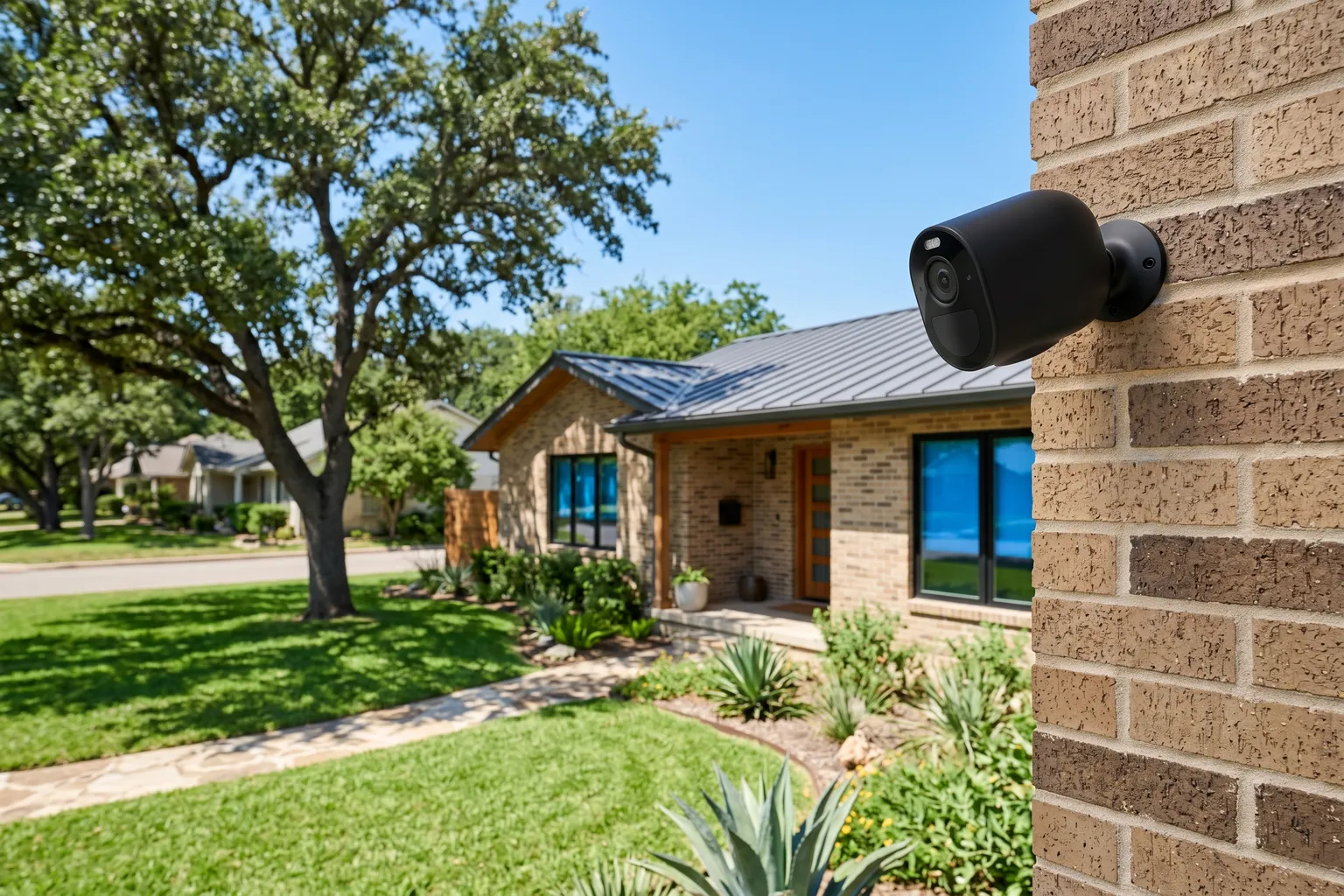
Home security cameras have gotten cheap enough that there’s no good reason not to have them. That’s the good news. The bad news is that the security camera industry has collectively decided that the real product isn’t the camera — it’s the subscription. Ring wants $10/month. Nest wants $10/month. Arlo wants $7.99/month for a single camera (Source).
That’s the actual conversation nobody’s having in most buying guides. They’ll tell you about field of view and night vision performance and whether the motion zones are customizable. They won’t tell you that the camera you just bought is basically a live-view-only device until you hand over a credit card.
I’ve also seen best smart home devices roundups that toss security cameras in alongside smart bulbs and thermostats like they’re all the same category of casual purchase. They’re not. A security camera is infrastructure. When something goes wrong — a break-in, a package theft, an incident on your porch — you’re going to want that footage. You need to know in advance whether you’re getting it.
Eight cameras. Honest subscription cost accounting. Actual tradeoffs. Here’s what’s worth buying in 2026.
Quick Comparison
| Camera | Type | Resolution | Night Vision | Subscription | Price |
|---|---|---|---|---|---|
| Arlo Pro 5S 2K | Outdoor (wire-free) | 2K HDR | Color | $7.99/mo (Plus) | – |
| Google Nest Cam (wired) | Indoor | 2K | Yes | $10/mo for history | ~$129.99 |
| Ring Stick Up Cam (wired) | Indoor/Outdoor | 1080p | B&W | $10/mo for history | ~$79.99 |
| Ring Indoor Cam Gen 2 | Indoor | 1080p | B&W | $10/mo for history | ~$59.99 |
| Blink Outdoor 4 | Outdoor (battery) | 1080p | B&W | $3.99/mo Basic Plan | – |
| Reolink Argus 3 Pro | Outdoor (solar) | 2K | Color | Free local/cloud | ~$84.99 |
| Eufy Indoor Cam 2K | Indoor | 2K | Yes | No subscription | – |
| Wyze Cam v3 | Indoor/Outdoor | 1080p | Color | Free + paid tiers | ~$35.98 |
Outdoor Winners
1. Arlo Pro 5S 2K — Best Outdoor Camera
The Arlo Pro 5S 2K is the best outdoor home security camera you can buy right now, and it wins for a combination of reasons that are harder to find together than you’d expect: 2K HDR video, an integrated color spotlight, and wire-free installation.
The 2K HDR image quality is genuinely better than 1080p for identifying faces and license plates — not marginally better, meaningfully better. HDR helps in the high-contrast situations that security cameras routinely face: a bright afternoon with a shadowed porch, a car with headlights pointing at the camera. Regular cameras blow out the highlights. The Arlo handles it.
The optional solar panel accessory is worth the extra cost if you don’t want to deal with charging at all.
Pros:
- 2K HDR is the real deal for image clarity
- Integrated color spotlight, siren, and two-way audio
- Wire-free installation, optional solar charging
- Works with Alexa, Google Home, and Apple HomeKit
Cons:
- The Arlo app has gotten better but still has occasional quirks
- Arlo Plus is $7.99/month for a single camera if you want cloud video history — know this going in
2. Blink Outdoor 4 — Best Budget Outdoor Camera
Blink is Amazon’s budget security camera line, and the Outdoor 4 is the reason you might not need to spend more. It’s 1080p, battery-powered (2 AA lithium batteries) and weather-resistant.
Night vision is infrared black-and-white. Not color. That’s a real downgrade from the Arlo Pro 5S, and it matters for identifying people in low light. If your primary concern is “I want to know something happened and capture a general sense of who did it,” Blink is fine. If you need to hand footage to police and make positive IDs, color night vision is worth the extra money.
The Blink Plus Plan is $11.99/month for unlimited devices and includes 60-day video history (Source). The local storage option via the Sync Module 2 is also solid — plug in a USB drive, store everything locally at no ongoing cost.
Pros:
- Local storage option via Sync Module 2 (sold separately)
- Clean Amazon/Alexa integration (obviously)
Cons:
- B&W night vision only — color night vision is now a real differentiator
- No color spotlight
- Sync Module 2 required for local storage (extra purchase)
- Motion sensitivity needs calibration to avoid false positives
3. Reolink Argus 3 Pro — Best Solar-Powered Option
Search Reolink Argus 3 Pro on Amazon → | ~$84.99
Reolink doesn’t have the brand recognition of Ring or Arlo, and that’s probably why it keeps ending up on lists like this. The Argus 3 Pro is a 2K color-night-vision outdoor camera with a built-in solar panel charging system, free local storage via SD card, and cloud storage available without a mandatory subscription.
Color night vision at this price is notable. The Reolink Argus 3 Pro uses a combination of its integrated spotlight and a color-capable sensor to deliver warm-toned footage in low light. It’s not as clean as the Arlo Pro 5S in full darkness, but it’s far better than the IR black-and-white you get on cameras that cost the same.
The solar panel keeps it topped up through most of the year in most climates. In northern climates during winter, you might need to bring it in for a charge every month or two. Minor gripe, honestly.
No subscription required for local SD card storage. Cloud storage is available through Reolink’s own service. The app is functional without being polished — this is a company that prioritizes hardware value over software experience, which is a reasonable trade.
Pros:
- 2K resolution with color night vision for the price
- Solar charging — no batteries to replace or charge
- Free local SD card storage, no subscription required
- Solid build quality and weatherproofing
- Person/vehicle detection without a subscription
Cons:
- Reolink’s app and cloud service are less refined than Ring or Arlo
- Solar charging dependent on sun exposure — not ideal in cloudy regions
- Fewer smart home integrations than the big brands
Indoor Winners
4. Google Nest Cam (Indoor, Wired) — Best for Google Households
Buy on Amazon → | ~$129.99
I’ll be direct: the Google Nest Cam is a premium-priced 2K camera, and its main justification for that price is how well it integrates into the Google Home ecosystem. If you’re not in that ecosystem, it’s hard to recommend over something like the Eufy.
If you are a Google Home household — Nest thermostats, Nest doorbell, Google displays — the Nest Cam makes sense in a way that’s hard to fully quantify until you use it. The camera shows up natively in the Google Home app alongside everything else. You can pull up a live view from your Nest Hub display by saying “show me the living room.” Activity notifications integrate cleanly with the rest of your home automations. The experience is cohesive.
The 2K image is clean and performs well in mixed lighting. The on-device intelligence — recognizing people vs. animals vs. packages — is genuinely good, and some of it runs locally on the camera without requiring a cloud subscription. Google Home Premium is $10/month per home for 30 days of history (Source).
$10/month. That’s the deal. Know what you’re signing up for.
Pros:
- Best-in-class Google Home integration
- On-device intelligence for person/pet/package detection
- Clean, compact industrial design
- 2K video with solid low-light performance
Cons:
- Google Home Premium subscription ($10/month) required for full video history
- Wired only — installation requires an outlet near your mount location
- Meaningful value mostly limited to Google ecosystem users
5. Ring Indoor Cam Gen 2 — Best for Ring Households
Buy on Amazon → | ~$59.99
Ring’s Indoor Cam Gen 2 is compact, clean, and does what it needs to do. It’s a 1080p wired camera with a privacy shutter — a physical lens cover you can engage when you don’t want it recording. That’s a feature I wish more indoor cameras had, and Ring deserves credit for including it.
The Ring ecosystem integration is tight: if you already have a Ring doorbell, Ring Alarm, or Ring Floodlight Cam, adding this to the app is seamless. You get a unified notification center, linked event timelines, and the Neighbors feed if that’s your thing. (It’s not my thing. But it exists.)
The subscription situation is the same as all Ring products: Ring Solo at $10/month per device or Ring Multi at $20/month for all devices at your home gets you up to 180-day video history, snapshot capture between events, and extended pre-roll. Without a subscription, you get live view and motion alerts. No recorded video. That’s not a free tier — that’s a live-view monitor with a motion alarm.
If you’re already paying for a Ring Multi subscription for your doorbell, adding this camera is covered. That changes the math significantly.
Pros:
- Physical privacy shutter — an underrated feature
- Excellent Ring ecosystem integration
- Compact, unobtrusive design
- Live view available without subscription
- Alexa integration is seamless (Amazon owns Ring)
Cons:
- No subscription = no recorded video, full stop
- 1080p with no HDR at $59.99 feels dated compared to Eufy
- No local storage option
- Black-and-white night vision only
6. Eufy Security Indoor Cam 2K — Best No-Subscription Indoor Camera
Buy on Amazon →
The Eufy Indoor Cam 2K is the camera I’d recommend to anyone who’s subscription-averse. And frankly? That’s a reasonable position.
2K resolution. Local storage via microSD card (sold separately). On-device AI for person detection. No monthly fee. Ever. The footage lives on the camera, not on Eufy’s servers, which also addresses the privacy concerns some people have about cloud-connected cameras.
It gives you better resolution, local storage, and zero ongoing cost than the Ring Indoor Gen 2. That’s a clean win on the numbers.
The trade-offs are real but manageable. The Eufy app is functional but not as polished as Ring or Google’s. Integration with third-party smart home platforms is limited — it works with Alexa and Google Assistant for voice commands, but it’s not a first-class citizen in either ecosystem. No Apple HomeKit. The design is a little plasticky.
None of that matters if you just want a camera that records reliably, stores footage locally, and doesn’t send you a bill.
Pros:
- 2K resolution — better than Ring Indoor Cam Gen 2
- Local storage with no subscription required, ever
- Person detection included free
- Two-way audio, motion zones, activity zone customization
Cons:
- App quality doesn’t match the hardware value
- Limited smart home platform integration
- No 24/7 continuous recording on local storage by default (motion-triggered)
- Less refined notification system than Ring or Nest
Budget Picks
7. Ring Stick Up Cam (2nd Gen, Wired) — Most Flexible Placement
Buy on Amazon → | ~$79.99
The Ring Stick Up Cam is the Swiss Army knife of the Ring lineup. Indoor or outdoor use. Wired or battery version. Mounts on a wall, sits on a shelf, or attaches to a ceiling with the right mount. If you have a specific placement challenge — a garage corner, a covered patio, an entryway with no nearby outlet — the Stick Up Cam has an answer for it.
Image quality is 1080p with HDR. Night vision is infrared, so black and white in full darkness. It has a customizable motion zone system, two-way talk, a built-in siren, and the standard Ring Protect subscription requirements for video history.
The wired version is the one to get if you have outlet access. Consistent power, no battery management. The battery version is convenient but drains faster than Ring’s marketing suggests if your camera sees a lot of activity.
Worth knowing: the 2nd gen wired version has improved the color accuracy and low-light performance compared to the original. Not a huge jump, but it’s noticeably better.
Pros:
- Genuinely versatile — works indoor and outdoor, wired and battery
- Solid build quality, certified IP55 weather resistance
- Built-in siren is a real deterrent
- Integrates cleanly with the rest of the Ring ecosystem
- Improved low-light color accuracy over prior gen
Cons:
- Ring Protect subscription required for video history ($10/month per device)
- 1080p in a world increasingly moving to 2K
- B&W night vision; no color spotlight
- Battery version drains faster under heavy motion load
8. Wyze Cam v3 — Best Value Camera, Full Stop
Buy on Amazon → | ~$35.98
The Wyze Cam v3 is annoying to put on a list because it makes writing nuanced comparisons harder. It’s $36. It has color night vision. It works indoor and outdoor (IP65 rating). It records to a local SD card without a subscription. Person and motion detection are included free.
Wyze Cam Plus, their subscription at $2.99/month per camera, adds AI-powered person, vehicle, pet, and package detection, plus cloud video history (Source). It’s optional, not required. And at $2.99/month, if you do want it, it’s the cheapest paid tier on this list.
The app is — and I say this as someone who’s used basically every camera app in this category — fine. Not great. It had a rough period with server outages and a data breach a few years back that damaged user trust, and Wyze has spent considerable time since then trying to rebuild that. The security architecture is better now. Whether you trust it is a personal call.
The hardware, though? The hardware is hard to argue with at this price. Color night vision at $36 is a genuine achievement. Starlight sensor technology that was a premium feature two years ago, now in a camera that costs less than a nice dinner.
If you’re setting up cameras for the first time and want to see if this whole home security camera thing works for you before investing in a proper ecosystem — Wyze is the right starting point.
Pros:
- Color night vision at $36 is remarkable for the price
- IP65 weather resistance — genuine indoor/outdoor flexibility
- Free local SD card storage with no subscription
- Works with Alexa and Google Assistant
- Wyze Cam Plus at $2.99/month is the best subscription value if you want it
Cons:
- Wyze had notable security and reliability issues in the past — the company has improved but the history exists
- Build quality is functional, not premium — feels like what it costs
- App reliability has historically been inconsistent
- Not a good fit for Apple HomeKit users
The Subscription Math Nobody Does For You
Let’s be honest about what these cameras actually cost over three years:
| Camera | Price | Annual Subscription | 3-Year Total |
|---|---|---|---|
| Reolink Argus 3 Pro | $84.99 | $0 (local storage) | $84.99 |
| Wyze Cam v3 | $35.98 | $0 or $35.88/yr | $35.98 – $143.62 |
| Ring Indoor Cam Gen 2 | $59.99 | $120/yr (Ring Solo) | $419.99 |
| Ring Stick Up Cam (wired) | $79.99 | $120/yr (Ring Solo) | $439.99 |
| Google Nest Cam (indoor) | $129.99 | $100/yr (Google Home Premium) | $429.99 |
That Ring Indoor Cam at $59.99 costs $420 over three years if you want recordings.
That’s not a subtle difference.
What to Actually Buy
If you want the best outdoor camera and subscriptions don’t bother you: Arlo Pro 5S 2K. Best image quality, best build.
If you want outdoor without subscription costs: Reolink Argus 3 Pro or Blink Outdoor 4. Both are legitimate.
If you want indoor and hate subscriptions: Eufy Security Indoor Cam 2K. It wins on specs and zero ongoing cost.
If you’re already in the Ring ecosystem: Ring Indoor Cam Gen 2 makes sense — you’re probably already paying for a Ring subscription. Adding cameras costs nothing extra on the Ring Multi plan.
If you’re already in Google Home: Google Nest Cam. The ecosystem integration is worth the premium if you use it.
If you just want to try this for cheap: Wyze Cam v3. Buy two for less than the price of one Ring Indoor Cam. See if you actually use them.
The best home security camera is the one you’ll mount, configure, and actually check when the notification fires at 2am. Don’t overcomplicate it.