
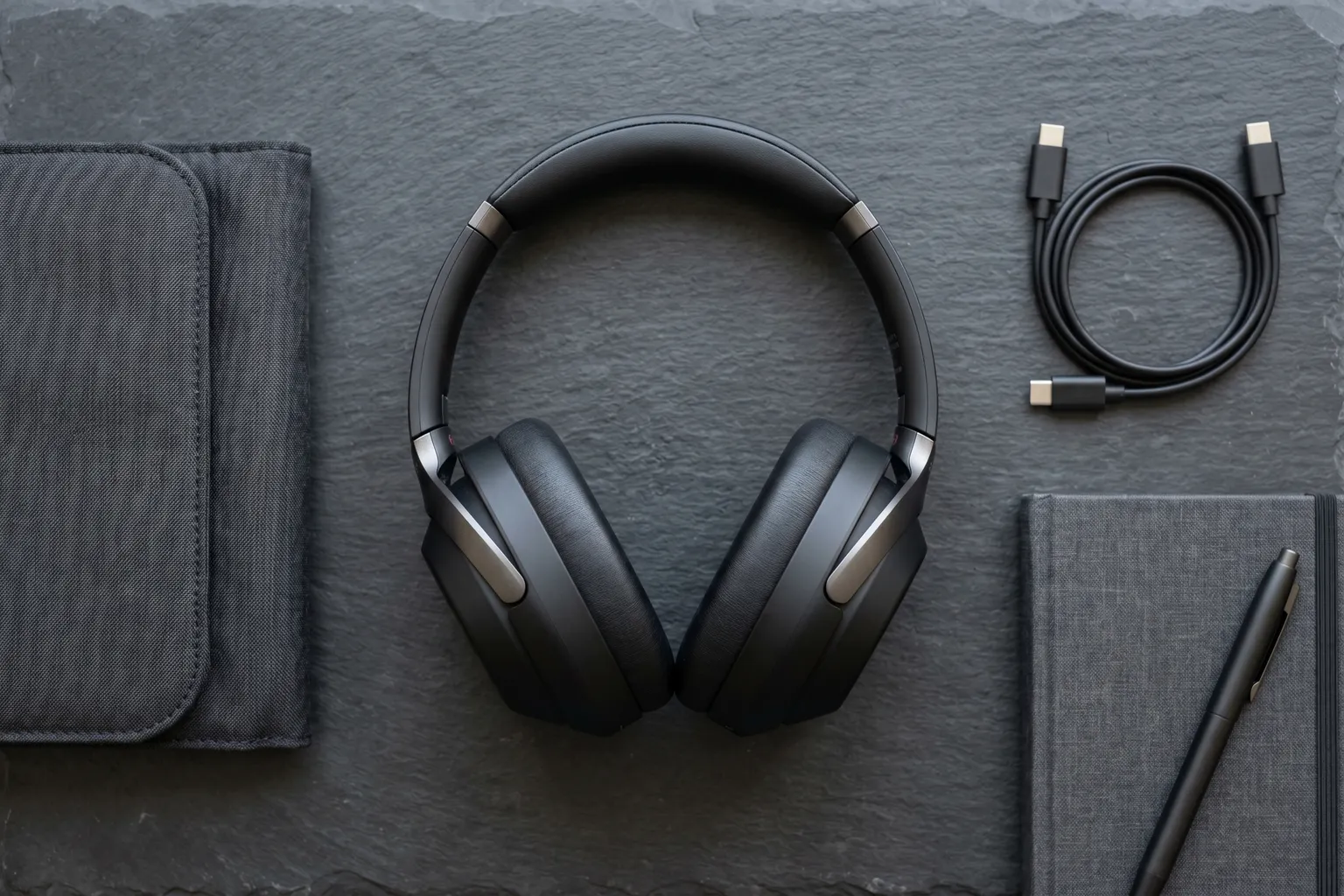
- Sony WH-1000XM6 is the best noise cancellation you can buy right now -- the ANC improvement over the XM5 is real and confirmed by independent measurement
- Bose QuietComfort Ultra wins on comfort for long sessions -- extended wear is noticeably easier than Sony's fit
- Apple AirPods Max 2 is premium-priced for a reason, but the Apple tax is real; it's only worth it if you're deep in the Apple ecosystem
- Jabra Evolve2 85 is the right call for office and call-center use -- the call quality gap over consumer headphones is not subtle
- Anker Soundcore Space One punches above its $80 price and is a credible budget option for people who can't justify spending $350+
- ANC performance still scales heavily with price in 2026 -- the budget tier delivers noise reduction, the flagship tier delivers noise elimination
TL;DR: Sony WH-1000XM6 is the best noise cancelling headphone in 2026 for most people. Bose QuietComfort Ultra is the comfort pick for long sessions. Apple AirPods Max 2 if you’re Apple-everything and can justify the price. Jabra Evolve2 85 if calls matter more than music. Anker Soundcore Space One if you need something real under $100.
Noise cancelling headphones are one of the few product categories where spending more money actually gets you something. Not always. But here.
I’ve been pulling apart spec sheets, RTINGS.com measurements, Wirecutter test methodology documents, and Amazon review dumps – particularly the one- and two-star reviews, because that’s where the real information lives – to put this together. The goal wasn’t to rank products by marketing budget. It was to figure out: which ones actually cancel noise, hold up over time, and are worth what they cost?
Ten pairs made the cut. Here’s what I found.
Quick Comparison: Best Noise Cancelling Headphones 2026
| Headphone | Price | Battery (ANC on) | Best For | ANC Tier |
|---|---|---|---|---|
| Sony WH-1000XM6 | ~$399 | 30 hrs | Commuting, travel | Flagship |
| Bose QuietComfort Ultra | ~$379 | 24 hrs | Long sessions, comfort | Flagship |
| Apple AirPods Max 2 | ~$427 | 20 hrs | Apple ecosystem | Flagship |
| Jabra Evolve2 85 | ~$229 | 37 hrs | Office, calls | Pro/Office |
| Sennheiser Momentum 4 | ~$349 | 60 hrs | Audiophile listening | Flagship |
| Beats Studio Pro | ~$349 | 36 hrs | Gym, lifestyle | Mid |
| Sony WH-1000XM5 | ~$299 | 30 hrs | Value flagship | Flagship |
| Bose QuietComfort 45 | ~$279 | 24 hrs | Budget Bose | Mid-flagship |
| Anker Soundcore Space One | ~$80 | 40 hrs | Budget ANC | Budget |
| Anker Soundcore Q31i | ~$80 | 50 hrs | Budget audiophile | Budget |
1. Sony WH-1000XM6 — Best Overall
Price: ~$399 | Check on Amazon
The XM6 is the benchmark. Not because Sony said so in a press release, but because the RTINGS.com noise cancellation measurements – which are the most methodologically consistent third-party tests available – show it outperforming everything else in its tier.
What changed from the XM5? Sony rebuilt the ANC processor. The new QN3 chip processes 24 bands of noise versus the XM5’s 12. In practice, that means it handles mid-frequency noise (voices, HVAC hum, office ambience) better than its predecessor. The XM5 was already excellent at low-frequency rumble – plane engines, subway – and the XM6 keeps that while improving where the XM5 had gaps.
Battery life holds at 30 hours with ANC active. Multipoint Bluetooth lets you connect two devices simultaneously, which matters if you’re switching between a laptop and phone constantly. The ear cushion redesign reduced clamp pressure – a complaint on the XM5 that showed up in enough one-star reviews to take seriously.
The honest caveat: The fit is still a polarizing shape. People with wider heads find it clamps after an hour. If that’s you, the Bose section below is where you should be looking.
Verdict: If noise cancellation performance is your primary criteria, nothing beats this in 2026.
2. Bose QuietComfort Ultra — Best for Long Sessions
Price: ~$379 | Check on Amazon
Bose’s ANC has always been good. But the QuietComfort Ultra adds something worth paying attention to: Immersive Audio mode, which is Bose’s spatial audio implementation. It uses head tracking to create a 3D sound stage that actually works on certain content. Not a gimmick – or at least, less of one than most spatial audio marketing suggests.
The real reason to buy the QC Ultra over the Sony, though, is comfort. The ear cups are deeper and the clamping force is lighter. People who wear headphones for 4-5 hours straight – writers, developers, anyone in deep work – consistently rate the Bose more comfortable over extended sessions. That’s not nothing.
Battery drops to 24 hours with Immersive Audio on, which is a real tradeoff. ANC-only mode without the spatial stuff gets closer to the Sony’s 30 hours.
Where it loses to Sony: raw ANC measurement. The RTINGS numbers are clear – Sony cancels more noise across frequency bands. For most real-world listening, you won’t notice. In a genuinely loud environment like a transatlantic flight? You might.
Verdict: The comfort pick. If you wear headphones for marathon sessions, or if Sony’s fit hasn’t worked for you historically, this is probably your pair.
3. Apple AirPods Max 2 — Best for Apple Users
Price: ~$427 | Check on Amazon
Apple replaced the AirPods Max with the AirPods Max 2, and the Apple tax point still stands: at $427, they’re priced aggressively for what they offer on paper. The battery is still 20 hours – worse than Sony and Bose. There’s no folding mechanism. The case is ridiculous.
And yet. If you’re using an iPhone, Mac, iPad, and Apple Watch – which a lot of people are – the seamless device switching is genuinely better than anything else. The H2 chip handles ANC with Sony-tier effectiveness. Spatial audio with head tracking is the best implementation on any headphone. The build quality is extraordinary. You can feel the difference in the materials.
The USB-C update matters primarily because Lightning cables are increasingly annoying to own. That’s it. Don’t upgrade from the Lightning version for USB-C alone.
Verdict: Worth it if you’re already Apple-heavy. A poor value if you’re not. The ecosystem premium is real and so is what you get for it.
4. Jabra Evolve2 85 — Best for Office and Calls
Price: ~$229 | Check on Amazon
The Evolve2 85 is not a music headphone. It’s a professional headset engineered around call quality, and it’s extremely good at that specific thing.
The 8-microphone array – 6 on the headset, 2 on the boom arm – is the main event. Call quality from the other end of the line is noticeably better than consumer headphones. If you’re on Zoom calls for 6 hours a day, people will hear the difference. Jabra lists the call performance on RTINGS.com and the scores hold up.
The ANC is tuned for office environments specifically – the frequencies of HVAC systems, keyboard noise, and conversation chatter. It’s not a match for Sony in pure measurement terms, but it’s optimized for where office workers actually sit.
Battery is excellent at 37 hours, and the charging stand is a legitimately useful feature. Microsoft Teams and UC certified versions are both available.
The honest assessment: It’s ugly. The boom arm is polarizing. If aesthetics matter and you’re not primarily on calls, one of the consumer options will serve you better. But for call quality in professional settings? This is the right tool.
5. Sennheiser Momentum 4 Wireless — Best Sound Quality
Price: ~$349 | Check on Amazon
The Momentum 4 does something unusual: it prioritizes audio quality over ANC performance. That’s the right tradeoff for a specific type of person – the one who wants to actually hear the music rather than just block the world out.
The 60-hour battery is genuinely remarkable. That’s the market-leading figure in 2026 and it’s not close. You can use these headphones for a week of commuting without charging them. The audiophile crowd has consistently praised the tuning – it’s more neutral than Sony’s bass-forward sound signature, which either sounds “accurate” or “thin” depending on what you listen to.
ANC is good, not great. It handles low frequencies well. Midrange noise reduction is where Sony and Bose pull ahead. The honest read: if you’re buying these because you love music and want to hear it well, they deliver. If primary noise cancellation is the goal, Sony XM6 is a better fit.
Verdict: The audiophile pick in this list. Worth it if sound quality is the axis you care most about.
6. Beats Studio Pro — Best for the Gym Crowd
Price: ~$349 | Check on Amazon
Beats has always been a lifestyle brand first and an audio brand second. The Studio Pro tries to change that narrative – and it partially succeeds.
The Apple H2 chip gives it genuine ANC capability. The bass tuning is punchy and forward, which works well for workout playlists and not as well for detailed listening. The unique feature is the USB-C lossless audio mode: plug in a USB-C cable and you get up to 24-bit/48kHz lossless playback. That’s unusual at this price and genuinely useful for people who care about wired lossless listening.
Battery at 36 hours with ANC is excellent. The design is better than most Beats products. But – the price is a problem. At $349, you’re in Sony XM5 territory, which beats the Studio Pro on ANC measurements. The Beats premium is partly for the brand, partly for the lossless USB-C audio.
Verdict: Good headphone, awkward price. Best if you’re gym-focused and want iOS ecosystem integration at a consumer price point.
7. Sony WH-1000XM5 — Best Value Flagship
Price: ~$299 | Check on Amazon
Now that the XM6 is out, the XM5 has dropped in price – often to $279-299. That makes it the best value proposition on this list.
The XM5’s ANC was the flagship standard when it launched. The XM6 improves on it, but the XM5 is still in the top tier. If you can find it for $250-300, you’re getting 90% of the XM6’s performance for 25% less money.
Battery life, build quality, app integration – all the same. The fit criticism is the same too. If the XM6’s shape wouldn’t work for you, neither will the XM5.
Verdict: Buy this if you want Sony flagship performance and can catch it on sale. Watch the price on Amazon – it fluctuates.
8. Bose QuietComfort 45 — Reliable Midrange Bose
Price: ~$279 | Check on Amazon
The QC45 is the previous-generation Bose flagship. It’s been replaced by the QuietComfort Ultra, which means it’s been dropping in price and showing up in sales regularly.
The ANC is still excellent by midrange standards. The comfort is signature Bose – lighter clamping, deeper cups. Battery holds at 24 hours. The simplicity of the controls (physical buttons, not touch panels) is something a lot of people prefer. No spatial audio, no adaptive ANC mode – just reliable noise cancellation and a comfortable fit.
If the QC Ultra is out of budget, the QC45 gives you most of what matters. The gap between them is smaller than the gap between either and a budget headphone.
Verdict: The sensible Bose buy if the QC Ultra’s price is a stretch.
9. Anker Soundcore Space One — Best Budget ANC
Price: ~$80 | Check on Amazon
Anker retired the Space Q45 and replaced it with the Space One. For eighty dollars, this headphone should not work as well as it does.
The adaptive ANC adjusts to your environment across 5 levels you can fine-tune in the app – not as sophisticated as Sony’s implementation, but genuinely functional. Battery life hits 40 hours with ANC on, which is a real number even if it’s shorter than the old Space Q45’s 50. Anker also added LDAC support this generation, something the old Space Q45 didn’t have. Build quality is plastic but not cheap-feeling plastic.
What you’re giving up: ANC performance doesn’t touch the flagship tier. In a quiet environment, you won’t notice. On a loud flight, you’ll notice. The sound quality is decent but clearly budget – the bass can get muddy at high volumes.
The Amazon reviews are what convinced me this one belongs on the list. Thousands of verified purchasers specifically citing the ANC as “better than expected” at this price point. That’s a real signal.
Verdict: The correct budget pick. If you can’t justify $300+, start here. Android users get the added benefit of LDAC support.
10. Anker Soundcore Q31i — Budget with LDAC
Price: ~$80 | Check on Amazon
Anker replaced the Life Q35 with the Q31i. LDAC support – Sony’s high-resolution audio codec – carries over, and the Q31i adds real 4-mic adaptive ANC on top of it, which the old Life Q35 didn’t have.
Battery sits at 50 hours with ANC on and 80 hours with it off, a real improvement over the old Life Q35’s 40 hours. The sound quality, especially via LDAC, is better than the price suggests. For music listeners on a tight budget who have an Android device (LDAC is Android-native, iOS doesn’t support it), this is a smart buy.
If you’re on iOS, the LDAC advantage disappears. In that case, the Space One is the better budget pick.
Verdict: Best budget headphone for Android users who care about audio quality.
Which Headphone Is Right for You?
Not every pair fits every use case. Here’s how to think about it:
Commuting (subway, bus, city streets): Sony WH-1000XM6. The ANC is the best in the field for low- and mid-frequency noise – exactly what transit throws at you. The 30-hour battery covers a full workweek of commuting without charging.
Office work: It depends. If calls are your primary use – Jabra Evolve2 85, no contest. If music and focus matter more than call quality – Bose QuietComfort Ultra for the comfort during 6-hour stretches, or Sony XM6 for pure ANC performance.
Air travel: Sony XM6 or Bose QC Ultra. Both are excellent for the low-frequency engine rumble of a plane cabin. The Bose wins for comfort on ultra-long-haul routes (10+ hours). Bring the cable for the Sony – some planes still have 3.5mm connections.
Audiophile listening at home: Sennheiser Momentum 4 Wireless. The sound quality tuning is the best on this list. Pair it with the music generators and AI audio tools you’re already using – the detail retrieval is genuinely better than the Sony or Bose when sound quality is the priority. If you’re producing content and want to evaluate audio quality, consider checking out resources on AI voice generators and AI music tools that pair well with good monitoring headphones.
Podcast listening: Any of the top five work, but the Sennheiser Momentum 4 and Bose QC Ultra handle vocal frequencies particularly well. If you’re also producing podcasts, our guide on creating podcasts with AI tools covers the software side.
Budget-conscious buyer: Anker Soundcore Space One if you’re on iOS, Q31i if you’re on Android and want the longer battery life. Both now include LDAC, but only iOS-independent gains matter if you’re not on Android. Neither will mistake for a Sony, but both are legitimately good for the money.
What Actually Matters in an ANC Headphone
A few specs get overemphasized in ANC headphone marketing.
dB reduction claims are almost meaningless without methodology context. A brand claiming “43dB noise reduction” and another claiming “35dB noise reduction” don’t necessarily mean the first cancels more noise – the test frequencies, conditions, and methodology change everything. RTINGS.com uses a consistent methodology and is the only third-party noise cancellation measurement worth citing.
Sound quality ratings in roundups are often based on brief listening sessions with unfamiliar music. The better signal is frequency response curves from third-party measurement and long-term user reviews from people who’ve lived with the headphones.
Battery life is usually tested without ANC active, then marketed as the with-ANC number at a lower figure. Check both numbers. The Momentum 4’s 60-hour claim is with ANC off; with ANC on, it’s closer to 40 hours – still excellent, but a different number than the headline.
Transparency mode – the feature that lets outside sound in – varies wildly in quality. Sony’s implementation is the best on this list. Bose is close. AirPods Max 2 transparency is remarkable if you’re in the Apple ecosystem. Budget headphones often have transparency modes that sound noticeably unnatural.
Frequently Asked Questions
Are noise cancelling headphones worth it?
Yes. See the FAQ section at the top for the full breakdown. The short version: if you’re in noisy environments regularly, they’re worth it. The flagship tier is genuinely transformative. The budget tier is genuinely decent. Neither is the placebo product that critics claimed ten years ago.
How long do noise cancelling headphones last?
30+ hours at the flagship tier. 40-60 hours at the budget tier (fewer processing demands). Physically, 3-5 years with normal use. Buy the replacement ear cushions – it extends the lifespan at minimal cost.
Sony or Bose?
Sony for raw ANC performance. Bose for comfort. Neither is wrong. See the detailed comparison in sections 1 and 2 above.
Can they damage your hearing?
ANC itself can’t – it emits anti-noise, not amplified sound. The risk is people cranking volume higher than usual because ANC removes ambient noise. Keep it at 60% or below.
Best under $100?
Anker Soundcore Space One. Want the longer battery and don’t mind Android-only LDAC? Soundcore Q31i, or wait for a sale on either.
The Bottom Line
There’s a clear tier structure in this market. Sony WH-1000XM6 and Bose QuietComfort Ultra occupy the top of the pile – real, measurable noise cancellation that changes what it’s like to move through a noisy world. Apple AirPods Max 2 is in that tier for Apple users. The mid-tier (XM5, QC45, Beats Studio Pro, Sennheiser) offers most of the flagship performance at reduced prices. And the budget tier, led by Anker Soundcore, delivers something that was genuinely surprising when I first pulled the RTINGS data on it: real noise reduction at a price that doesn’t require rethinking your budget.
The wrong way to buy headphones is to buy on brand alone. The right way is to figure out your primary use case – calls, commuting, comfort, audio quality – and match accordingly. This list covers each one. For the input side of a focused desk or gaming setup, see our best gaming keyboards roundup — the right mechanical keyboard pairs well with good headphones for both deep work sessions and serious gaming.